






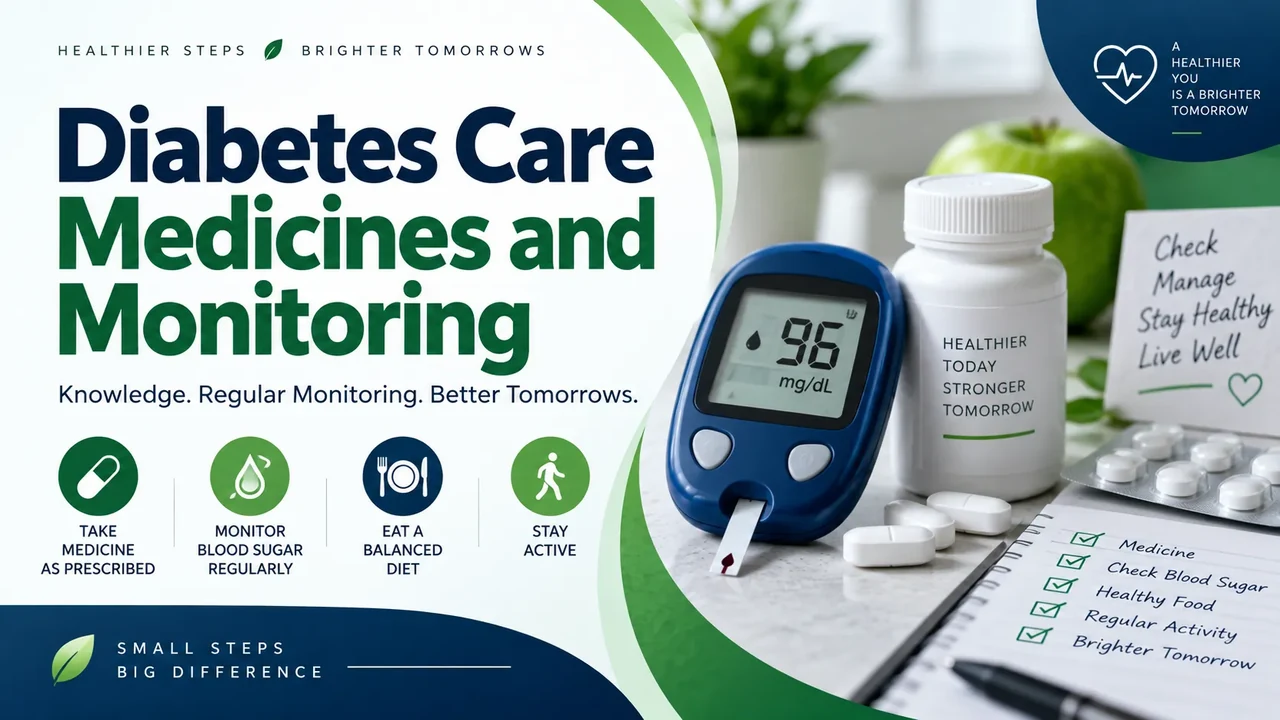
Diabetes care is usually a long-term routine rather than a single medicine or one perfect glucose reading. Treatment may include tablets, injectable medicines or insulin, depending on the type of diabetes and individual needs. Monitoring, food choices, activity, sleep and regular medical review help show whether the plan is working and whether it needs adjustment over time.

How it works
Different diabetes medicines work in different ways. Some improve the body’s response to insulin, some reduce glucose production by the liver, some increase glucose loss through urine, and others influence insulin release, appetite or digestion. Insulin replaces or supplements the insulin the body needs. Because the classes have different benefits and risks, one person’s medication list should never be copied by another person with diabetes.
Where it may fit in care
Home glucose monitoring is essential for some people and less frequent for others. The clinician managing diabetes should explain the target range, how often to check, and what action to take when readings are outside the plan. A single unusual reading can occur for many reasons, including illness, stress, food, missed medicine or meter technique. Patterns over time are usually more informative than one number in isolation.
Safer everyday use
Take medicines exactly as prescribed and know which treatments can cause low blood sugar. Keep a current medicine list and learn the sick-day advice provided by your diabetes team, because dehydration and infection can change how some medicines should be managed. Do not alter or stop diabetes medicines because of an online article or one high or low reading without appropriate professional guidance.
Side effects and important cautions
Symptoms of low blood sugar can include sweating, shaking, hunger, palpitations, confusion or unusual behaviour, although not everyone notices warning signs. High glucose can cause thirst, frequent urination and tiredness. Some medicines have class-specific side effects involving the stomach, kidneys, urinary tract or fluid balance. These should be discussed during routine reviews so the treatment can be adjusted safely when needed.
Building a practical daily routine
A regular meal pattern, fibre-rich foods, adequate hydration, physical activity and enough sleep support treatment. There is no single “diabetes diet” that fits everyone; portion size, carbohydrate pattern, cultural foods, weight goals and other conditions matter. Foot care, dental care, blood pressure, cholesterol, kidney checks and eye screening are also important parts of long-term diabetes health.
When to seek medical help
Urgent help is needed for severe hypoglycaemia, unconsciousness, repeated vomiting, severe dehydration, breathing difficulty, confusion, or very high glucose accompanied by significant illness. Contact the diabetes care team when readings repeatedly move outside the agreed range, when medicine side effects are difficult to manage, or when illness makes usual eating and medication routines impossible.
Keep useful information together
A simple health record makes medicine use safer. Keep the current medicine name, strength, reason for use, allergies, relevant conditions and the name of the prescriber or pharmacy in one place. Record important readings or symptoms only when they are useful to the care plan, and take the list to appointments. This reduces confusion when more than one clinician is involved and helps prevent accidental duplication when buying over-the-counter products.
Use medicine information wisely
Online health information can help you prepare questions, but it cannot examine you, review your full medicine list or replace local prescribing guidance. Use trusted patient leaflets and professional advice for decisions about starting, stopping or changing treatment. If guidance from a website conflicts with the label or a personalised plan, pause and check with a pharmacist or doctor rather than experimenting with the medicine on your own.
Questions worth asking a pharmacist or doctor
- What are my personal glucose targets?
- Which of my medicines can cause low blood sugar?
- What is my sick-day plan?
- How often should kidneys, eyes, feet, blood pressure and cholesterol be reviewed?
Key takeaway
Good diabetes care combines the right medicine with repeatable daily habits and regular review. Know what each medicine is for, monitor according to your personal plan, keep track of patterns rather than isolated numbers, and have a clear strategy for illness and low blood sugar.
Educational demo content only. It does not replace diagnosis, a prescription, the patient information leaflet, or advice from a qualified healthcare professional. Medicine availability, indications and warnings can vary by country.