





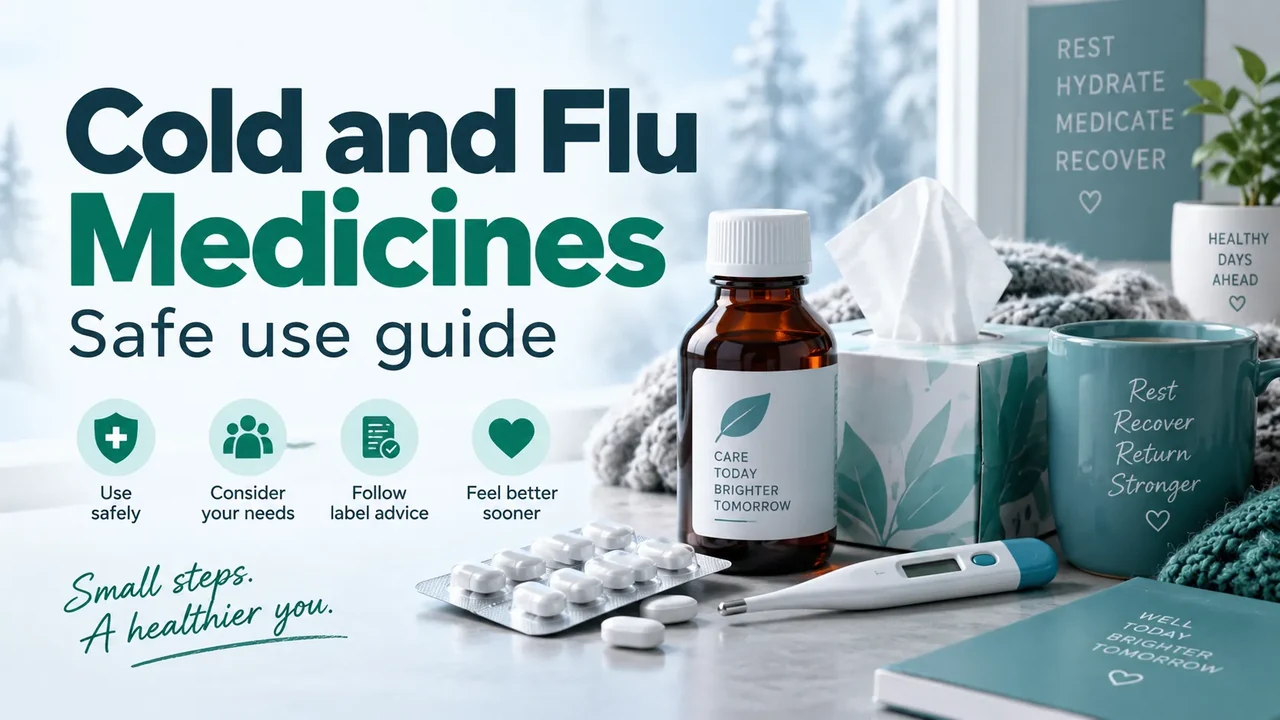
Most uncomplicated colds are caused by viruses and improve with time. Influenza can cause more intense fever, aches and fatigue, and some people are at higher risk of complications. Over-the-counter products do not cure the infection; they are designed to reduce specific symptoms such as fever, headache, congestion or cough. The safest approach is to treat only the symptoms that actually need treatment.

How it works
Many “day and night” or multi-symptom products combine several ingredients. These may include paracetamol, an antihistamine, a decongestant and a cough suppressant. Combination products are convenient, but they also make it easier to duplicate an ingredient with a separate headache or allergy medicine. Reading the active-ingredient list is therefore more important than comparing brand names.
Where it may fit in care
Simple care can be enough for many people: rest, fluids, warm drinks, saline nasal products and honey for cough in appropriate age groups. Decongestants are not suitable for everyone and may affect blood pressure, heart rate, sleep or urinary symptoms. Children need age-appropriate products and dosing devices, and some cough and cold medicines are not recommended for young children at all.
Safer everyday use
Never take extra paracetamol because a combination cold product “doesn’t feel strong enough” without first checking whether it already contains paracetamol. Avoid mixing sedating night-time products with alcohol or other sedatives. People with high blood pressure, heart disease, glaucoma, thyroid disease, prostate problems, pregnancy or multiple regular medicines should ask a pharmacist before using decongestants or complex combination products.
Side effects and important cautions
Drowsiness, dry mouth, jitteriness, palpitations, stomach upset and sleep disturbance can occur depending on the ingredients. Antibiotics do not treat routine viral colds or influenza. Antiviral medicines for influenza are prescription treatments used in selected people and work best when a clinician determines they are appropriate, especially for high-risk patients or severe illness.
Building a practical daily routine
At home, focus on hydration, sleep, temperature comfort and avoiding unnecessary medication. Wash hands, cover coughs and stay away from vulnerable people when actively unwell. If fever settles but then returns with worsening symptoms, or if a cough continues for weeks, reassessment may be needed because the illness may no longer be a simple cold.
When to seek medical help
Seek urgent care for severe breathing difficulty, bluish lips, chest pain, confusion, severe dehydration, seizures, or a child who is unusually difficult to wake. People who are pregnant, elderly, immunocompromised or living with significant heart or lung disease should seek advice earlier if flu-like symptoms are severe or rapidly worsening.
Keep useful information together
A simple health record makes medicine use safer. Keep the current medicine name, strength, reason for use, allergies, relevant conditions and the name of the prescriber or pharmacy in one place. Record important readings or symptoms only when they are useful to the care plan, and take the list to appointments. This reduces confusion when more than one clinician is involved and helps prevent accidental duplication when buying over-the-counter products.
Use medicine information wisely
Online health information can help you prepare questions, but it cannot examine you, review your full medicine list or replace local prescribing guidance. Use trusted patient leaflets and professional advice for decisions about starting, stopping or changing treatment. If guidance from a website conflicts with the label or a personalised plan, pause and check with a pharmacist or doctor rather than experimenting with the medicine on your own.
Questions worth asking a pharmacist or doctor
- Which active ingredients are in this combination product?
- Am I already taking another medicine with paracetamol or an antihistamine?
- Are decongestants appropriate with my blood pressure or heart medicines?
- Do my symptoms or risk factors mean I should be tested or assessed?
Key takeaway
Cold and flu treatment should be simple and symptom-focused. Check every active ingredient, avoid stacking similar medicines, use supportive care, and seek medical help when breathing problems, severe dehydration or high-risk health conditions make the illness more than a routine viral infection.
Educational demo content only. It does not replace diagnosis, a prescription, the patient information leaflet, or advice from a qualified healthcare professional. Medicine availability, indications and warnings can vary by country.