






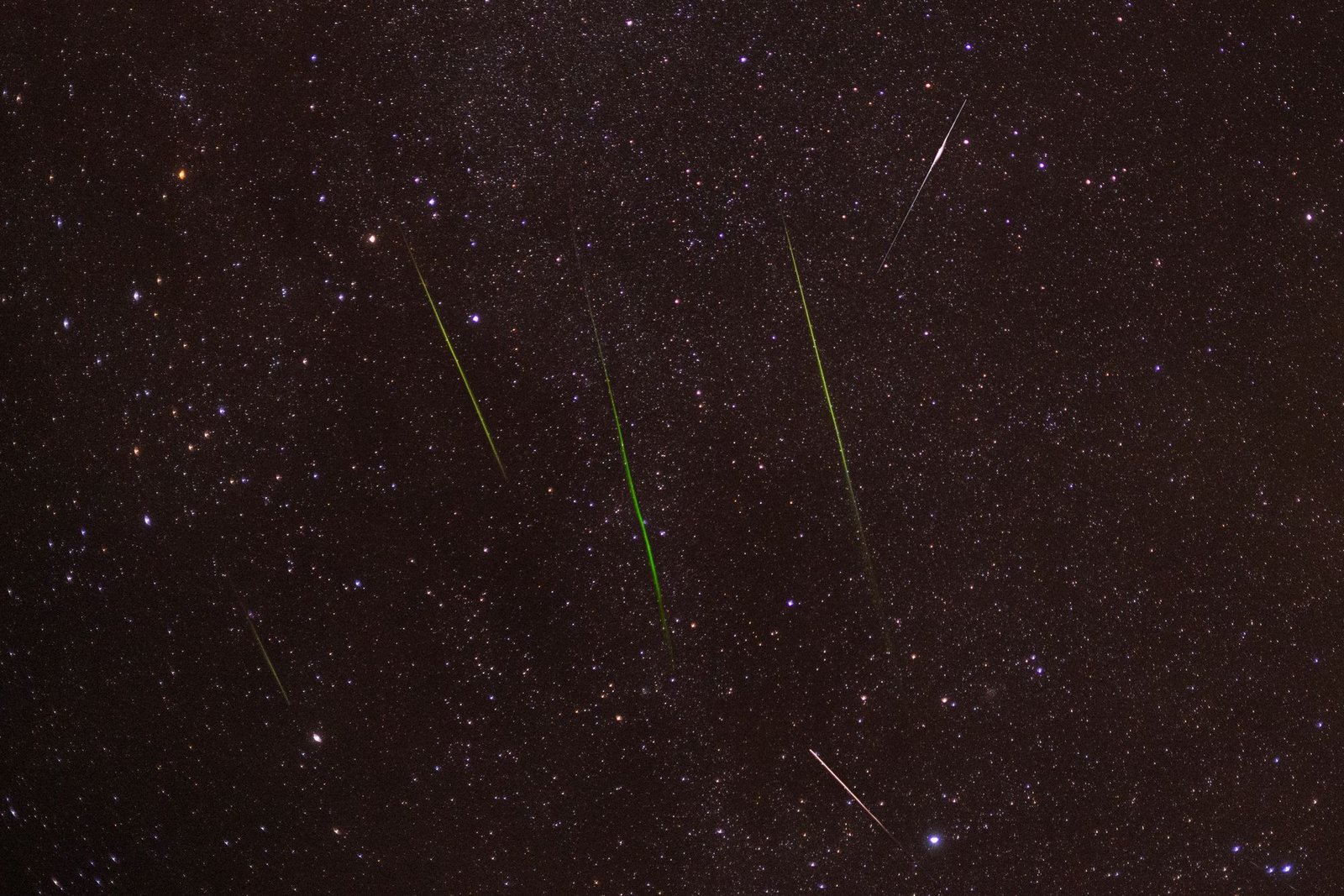
The short answer: the Leonid meteor shower peaks on the night of 17–18 November 2026. Under a dark sky, expect about 10–15 meteors an hour, best seen after midnight and before dawn. This is not a storm year — there will be no hundreds-per-hour outburst — but the Moon sets around midnight, leaving the best hours dark. Go somewhere dark, look toward Leo, and give your eyes 20 minutes to adjust.
When to watch
- Active: 6–30 November 2026.
- Peak night: 17–18 November. Most guides list the peak on the night of 17–18 November, with the predicted peak around 00:00 UTC on 18 November. The American Meteor Society lists 16–17 November — the two sources disagree by a night, so if you can, watch on both nights.
- Best hours: midnight to dawn. The radiant — the point in the sky the meteors appear to come from — rises around midnight and is highest at dawn.
- How many: about 10–15 meteors per hour under dark skies (a zenithal hourly rate of about 15, according to the International Meteor Organization). From a town or city, expect far fewer.
What you will see
Leonid meteors are fast — about 69.7 km/s (43.5 miles per second), according to NASA — and they often leave bright, lingering trails. They come from the comet 55P/Tempel-Tuttle, which sheds dust along its orbit; every November the Earth passes through that dust, and the dust burns up in our atmosphere as meteors. The radiant sits in the constellation Leo, near the bright star Regulus — but do not stare at the radiant. Meteors appear all over the sky; look up at a wide patch of dark sky and let them come to you.
The Moon helps this year
The first-quarter Moon is at 11:48 UTC on 17 November, and it sets around midnight. That means the Moon is out of the way for the prime meteor-watching hours after midnight — one of the better Leonid Moons in recent years. A full Moon would have washed out the fainter meteors; this year, it will not.
How to watch: five rules
- Get dark. Light pollution is the single biggest factor. A dark sky can show ten times more meteors than a town sky.
- Go after midnight. The radiant is up, the Moon is down, and the rates are highest before dawn.
- Give your eyes 20 minutes. Do not look at your phone — its light resets your night vision.
- Lie down and look up. A reclining chair or a blanket on the ground beats standing and craning your neck.
- Dress warmly. Mid-November nights are cold, and you will be still for an hour. Bring a blanket.
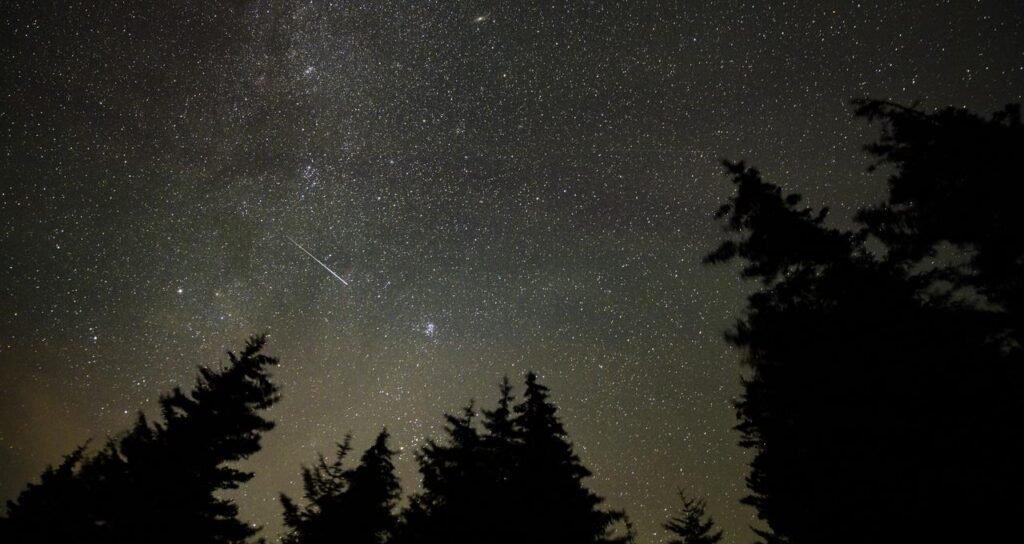
Leonids vs the year’s other showers
The Leonids are not the year’s biggest shower — that title belongs to the Geminids in December, which can produce 100 or more meteors an hour. The Leonids’ claim to fame is different: every 33 years, when the parent comet returns, they can produce a true storm of thousands per hour. The last great Leonid storm was in 2001. In 2026 there is no storm, and no outburst is expected — 10 to 15 an hour is the honest number.
What the Leonids do offer is speed. At nearly 70 km/s they are among the fastest meteors, which is why they leave bright, lasting trails. The Perseids in August are more numerous, but the Leonids are more dramatic per meteor. If you only watch one shower this autumn, this is the one with the best Moon conditions.
Photographing the Leonids
A phone can catch a bright Leonid, but a camera on a tripod does it far better. Use the widest lens you have, open the aperture fully, set the ISO to 1600–3200, and take continuous 15–25 second exposures pointed at a dark patch of sky away from the radiant. Do not expect every frame to have a meteor — most will be empty. The trick is patience: leave the camera running and check the frames afterwards. A single bright Leonid with a long trail is worth a hundred empty exposures.
Two more things in the same sky
If you are out before dawn on 15–16 November, look for Mars and Jupiter close together — about 1.2 degrees apart in the pre-dawn sky. And if you miss the Leonids, the next event is the full supermoon on 24 November, the first of three consecutive supermoons running through January 2027. The Northern Taurids also peaked around 12 November, so some slow, bright Taurid fireballs may still appear alongside the faster Leonids.
The bottom line
The Leonids peak on the night of 17–18 November 2026, with 10–15 meteors an hour under dark skies and a Moon that sets at midnight. It is not a storm year, so set expectations honestly — but a dark sky, warm clothes and an hour after midnight will show you one of the year’s most reliable showers.
Sources: timeanddate; EarthSky; Farmers’ Almanac; NASA November 2026 skywatching guide, via JNP Travel; International Meteor Organization (rates); American Meteor Society (peak-night listing). The peak-night disagreement between the AMS (16–17 November) and most guides (17–18 November) is stated in the article — watch both nights if you can. Checked 15 November 2026.